
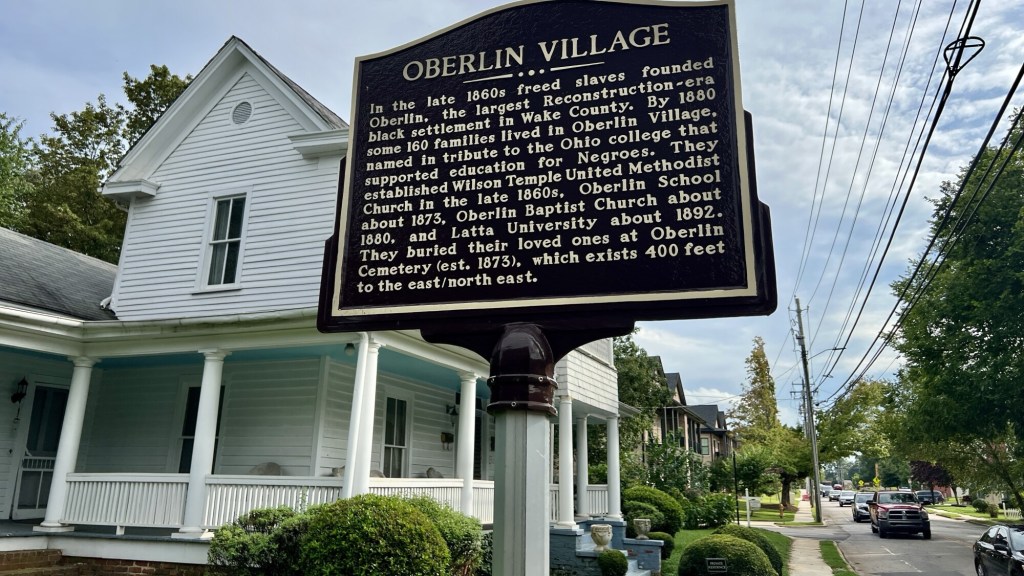
Just a few miles from downtown Raleigh, North Carolina, lies the land that once cradled Oberlin Village—a thriving post-Civil War community founded by formerly enslaved and free African Americans. Once home to over 1,200 residents, Oberlin stood as a beacon of Black resilience, family, education, and freedom during Reconstruction and beyond. Today, thanks to the efforts of Preservation North Carolina, that powerful legacy is being brought back into the light.
A Town Built by Freedom, Buried by Progress
In the years following the Civil War, Black families carved out a self-sustaining community on the outskirts of Raleigh. Oberlin boasted homes, churches, schools, and businesses. It was a testament to what freed people could accomplish when given a chance.
But as Raleigh expanded in the mid-20th century, Oberlin was gradually paved over in the name of progress—with highways, shopping centers, and new developments replacing much of the original village. Its rich history and cultural significance were all but erased from public memory—until now.
Preserving Oberlin’s Legacy: A Historic Preservation Milestone
In an ambitious and deeply meaningful project, Preservation North Carolina acquired and restored two surviving homes from the 1880s—rare remnants of the original village. These houses now serve as living museums and headquarters for the organization, helping to tell the story of Oberlin’s rise, erasure, and rediscovery.
During the meticulous renovation, historians and preservationists uncovered remarkable stories about the families who built and lived in these homes—stories of entrepreneurship, education, and community leadership that had been forgotten or ignored for decades.
Why Oberlin Matters Today
At a time when communities across the country are re-examining their pasts, Oberlin stands as a crucial reminder of the resilience and contributions of Black Americans in shaping our cities and culture. The restoration efforts shine a light on the challenges faced by historically Black communities and the ongoing struggle for preservation and recognition.
The project also serves as a model for equitable historic preservation, prioritizing not just architectural significance but the cultural and social histories embedded in these places.
Plan Your Visit
Visitors to the restored Oberlin homes can now explore interactive exhibits, oral histories, and curated archives that bring the community’s story to life. The site also hosts events, educational programs, and guided tours aimed at deepening understanding of this unique chapter in North Carolina’s history.
Join the Movement to Preserve Black History
“Oberlin: A Village Rooted in Freedom” is more than a restoration project—it’s a resurgence of memory, a call to honor the contributions of those too often left out of the historical narrative.
By supporting organizations like Preservation North Carolina, we can ensure that communities like Oberlin are not forgotten again—but celebrated, studied, and preserved for future generations.
Follow DoRaleigh.com for everything Raleigh.


 DoRaleigh