
This week’s reporting from The Carolinian and Triangle Tribune examines housing affordability, homelessness, neighborhood redevelopment, education, worker pay, voting, Black history and Triangle HBCU football.
The following stories were published between September 28 and October 4 and selected for their relevance to Raleigh, Durham and North Carolina’s Black communities.
Top Stories From The Carolinian
Raleigh launches an affordable-housing data dashboard
Carolinian staff writer Jordan Meadows reported October 2 that the City of Raleigh launched an interactive Housing Production Dashboard.
The tool maps affordable developments, tracks projects by year and program, and shows how money from Raleigh’s 2020 Affordable Housing Bond has been committed. City officials said the dashboard includes more than 5,900 affordable homes that Raleigh has helped create or preserve.
The report also highlighted the scale of Raleigh’s housing challenge. According to the city’s housing plan, a household must earn nearly $66,000 annually to afford a two-bedroom apartment at the area’s fair-market rent. The local market also lacks approximately 38,000 homes affordable to households earning between $15,000 and $35,000.
Homeownership disparities remain significant: 74% of Raleigh’s white households own their homes, compared with 47% of Black households.
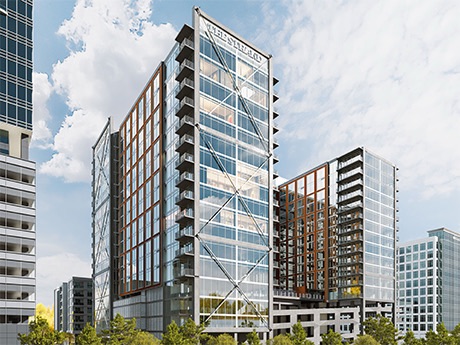
Read “Raleigh Launches Tool That Maps Out Affordable Housing Information” in The Carolinian.
Raleigh Rescue Mission expands services for women and children
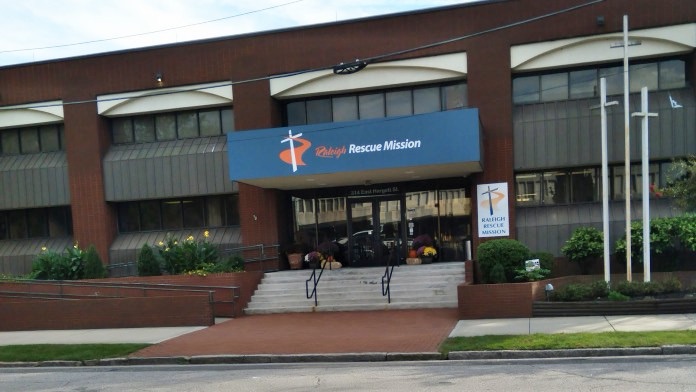
The Carolinian published an NC Newsline report October 4 about The Garden, Raleigh Rescue Mission’s new $41 million campus in Knightdale.
The campus can serve as many as 350 women and children daily, compared with approximately 60 at the organization’s former downtown Raleigh facility. Its opening also increases the mission’s capacity to serve men downtown.
The Garden is designed for participants entering a structured program centered on employment, transportation, housing and long-term independence. Its facilities include 101 private residential rooms, childcare, life-skills instruction and job-readiness programs.
The expansion comes as Wake County’s 2026 Point-in-Time Count identified 1,050 residents experiencing homelessness, including 307 people living without shelter.
Wake County address focuses on growth, schools and homelessness
Jordan Meadows covered Wake County’s 2026 State of the County address in a September 30 report.
Board of Commissioners Chair Don Mial said approximately 24,000 people are moving into Wake County each year. The rapid growth is increasing demand for schools, transportation, affordable housing, health care and other public services.
Mial reported that the county has supported 2,840 affordable homes since the beginning of 2024. Wake at Home, a county homelessness initiative, aims to connect 400 people living in encampments with housing and services while helping another 1,000 people experiencing homelessness for the first time return to housing quickly.
The address also covered proposed school and Wake Tech bonds, the county’s new East Raleigh public-health facility and the WakeMed-Atrium Health agreement.
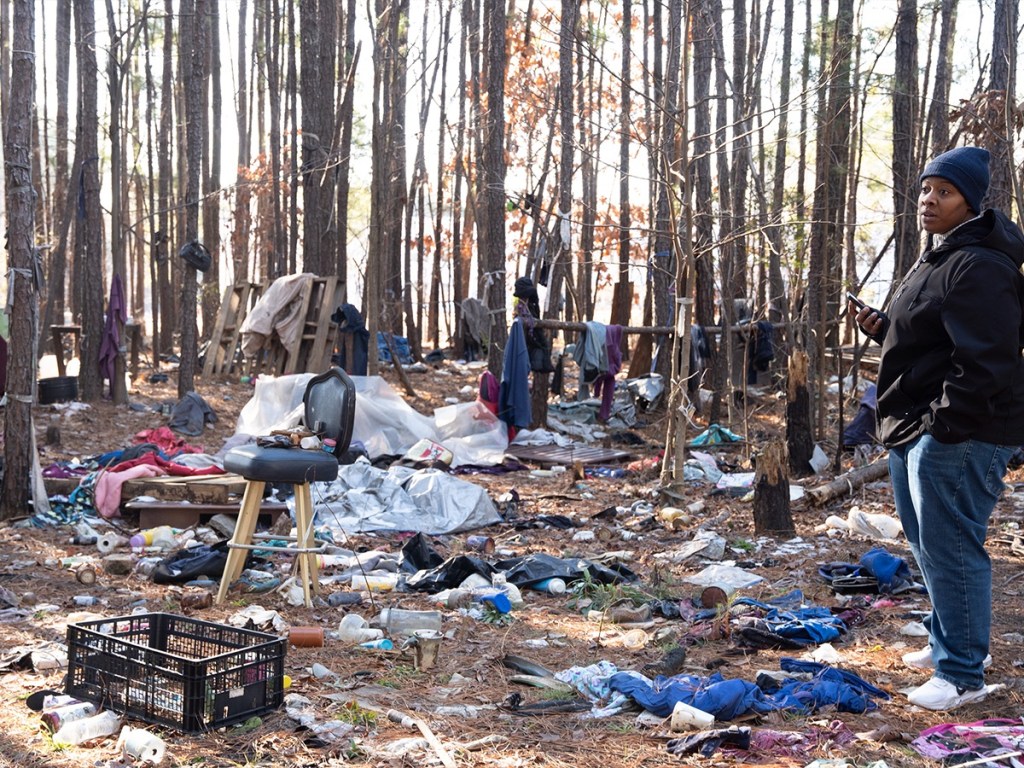
Read “Wake’s 2026 State of the County Address” in The Carolinian.
White Rock Baptist Church celebrates 160 years
Jordan Meadows reported October 4 on White Rock Baptist Church’s 160th anniversary and its place in Durham’s African American history.
The congregation was established in 1866 by members of Durham’s newly freed Black community. White Rock grew into an institution connected with education, health care, civil rights and neighborhood development.
Martin Luther King Jr. spoke at White Rock in February 1960 as student-led sit-ins spread across the South. The congregation’s original Hayti church was demolished in 1967 during construction associated with the Durham Freeway, but the church remained together and opened its current Fayetteville Street sanctuary in 1977.
The Durham County Board of Commissioners recognized the anniversary with a resolution honoring White Rock’s community contributions.
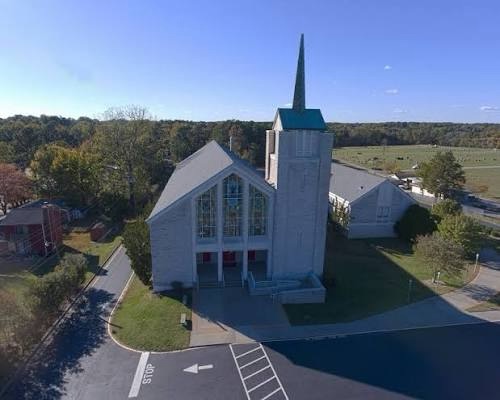
Read “White Rock Baptist Church Celebrates 160 Years” in The Carolinian.
North Carolina NAACP convention addresses voting, health and economic power
Carolinian staff writer Jheri Hardaway covered the North Carolina NAACP’s 83rd Annual State Convention in an October 2 report.
Delegates, young organizers, veterans and civic leaders gathered in High Point under the theme “We the People.” Sessions examined voting rights, health disparities, youth leadership, racial wealth and cooperation among Black institutions.
Public-health discussions addressed unequal maternal and infant health outcomes. The convention also encouraged local branches to recruit poll monitors and share information about the nonpartisan 866-OUR-VOTE election-protection hotline.
Because the convention included political advocacy and candidate appearances, readers should consult nonpartisan election resources and review the full text of ballot proposals before voting.
Read “North Carolina NAACP 83rd Annual State Convention” in The Carolinian.
NCCU falls to East Carolina in Greenville
The Carolinian reported October 3 that East Carolina defeated North Carolina Central University 42-9 in a nonconference matchup.
NCCU defensive lineman Taeshawn Alston recorded a sack, while quarterbacks Nelson Layne and Cobey Thompkins faced sustained pressure from East Carolina’s defense. Running back Zion Dobson contributed to the Eagles’ second-half rushing effort.
Read “East Carolina Defeats NC Central 42-9” in The Carolinian.
Top Stories From The Triangle Tribune
Bragtown residents question Durham redevelopment plans
Triangle Tribune reporter Kylie Marsh covered a September 29 community meeting about development in Bragtown and Oxford-Hamlin.
Bragtown residents expressed concerns about housing affordability, displacement, traffic, pedestrian safety and whether proposed investments would preserve the identity of the historically Black neighborhood.
Durham planners said residents’ input would help shape a Small Area Plan containing recommendations for future development. Officials also acknowledged that the plan would not stop projects already moving through the approval process.
Some residents said they have raised similar concerns with the city for years and want concrete investments in recreation, infrastructure and safe spaces for young people.
Read “Bragtown Residents Skeptical About Redevelopment Plans” in The Triangle Tribune.
NC State workers demand a living wage
A September 29 Triangle Tribune staff report examined a campaign involving NC State University housekeepers, dining employees and facilities workers.
More than 300 employees signed a petition asking the university to establish a minimum wage of $25 per hour, eliminate employee parking fees and conduct regular meetings with worker representatives.
Participating employees said some university workers hold two or three jobs but continue struggling with rent, food and other living expenses. The workers are organizing through a new chapter of the North Carolina Public Service Workers Union, UE Local 150.
Read “NCSU Housekeepers and Dining Workers Demand a Living Wage” in The Triangle Tribune.
Wake County schools recognize two education leaders
The Triangle Tribune published a Wake County Public School System announcement October 2 recognizing its 2026–27 principal and assistant principal of the year.
Roxann Sykes of Dillard Drive Magnet Elementary was named principal of the year. Since becoming principal in 2019, Sykes has helped transform Dillard into a Spanish-immersion magnet school and move it out of low-performing status. Every reported student group met growth expectations during the previous academic year.
Xavier Wallace-McGrew of South Garner High School was named assistant principal of the year. His leadership work emphasizes relationships, student engagement, school culture and improving South Garner’s academic performance.
Town hall explores political disengagement among young Black voters
Kylie Marsh reported September 29 on a National Urban League virtual town hall addressing youth participation in elections.
Panelists argued that younger voters are frequently invited into civic organizations without receiving meaningful authority or leadership opportunities. They also identified complicated election terminology, limited representation and a failure to connect public policy with everyday experiences as barriers to participation.
Participants encouraged organizations to meet young people through the media and community spaces they already use while explaining how decisions involving zoning, education, housing and voting affect their lives.
Read “Town Hall Explores Youth Political Disengagement” in The Triangle Tribune.
Black women filmmakers examine abuse and toxic relationships
In an October 1 Triangle Tribune column, writer and filmmaker April Mial discussed how Black women directors use film to examine psychological abuse, domestic violence, survival and healing.
Mial highlighted work by filmmakers including Chyna Robinson, Camille Billops and Luchina Fisher. She also connected the discussion with North Carolina filmmakers, educators and survivor-support organizations.
Triangle resources mentioned in the column include InterAct in Raleigh, Compass Center in Chapel Hill and Durham Crisis Response Center.
Shaw continues its strongest start since 2010
Triangle Tribune sports editor Bonitta Best reported October 1 that Shaw University entered its road game against Bowie State with a 4-1 record.
It was the Bears’ best five-game start since their 2010 CIAA championship season. Shaw also had three conference honorees: quarterback Alexander Marsh, linebacker Quadir McEachin and rookie Kristopher Young.
The report also examined NCCU’s response to its loss at East Carolina. Coach Trei Oliver highlighted a second-half defensive shutout and four turnovers as the Eagles prepared to return to Durham for games against Campbell and William & Mary.
Read “Shaw’s Train Keeps on Rolling” in The Triangle Tribune.
Why These Stories Matter
This week’s Black press coverage shows how growth and public policy affect Triangle neighborhoods in practical ways. Housing data, redevelopment plans, worker compensation and school leadership all shape whether longtime residents can remain in their communities and share in the region’s prosperity.
The reporting also preserves Black institutional history, elevates young voters and keeps NCCU and Shaw athletics central to the Triangle sports conversation.
Readers can support this work by visiting the original stories, subscribing to the publications and sharing credible Black-owned journalism.
Follow DoRaleigh.com for daily updates on government meetings, local festivals, and community happenings — your one-stop guide to everything Raleigh!
Connect With Us: Instagram | Facebook | BSky | Linkedin
Share With Us: Post your community News, Events, on our Submissions Page.
Advertise With Us: Interested in Advertising click here.
Published by Bryan Tomlinson | BTDesigns.pro |




Leave a comment