
Opinion | By Bryan Tomlinson, Founder and Editor, DoRaleigh.com
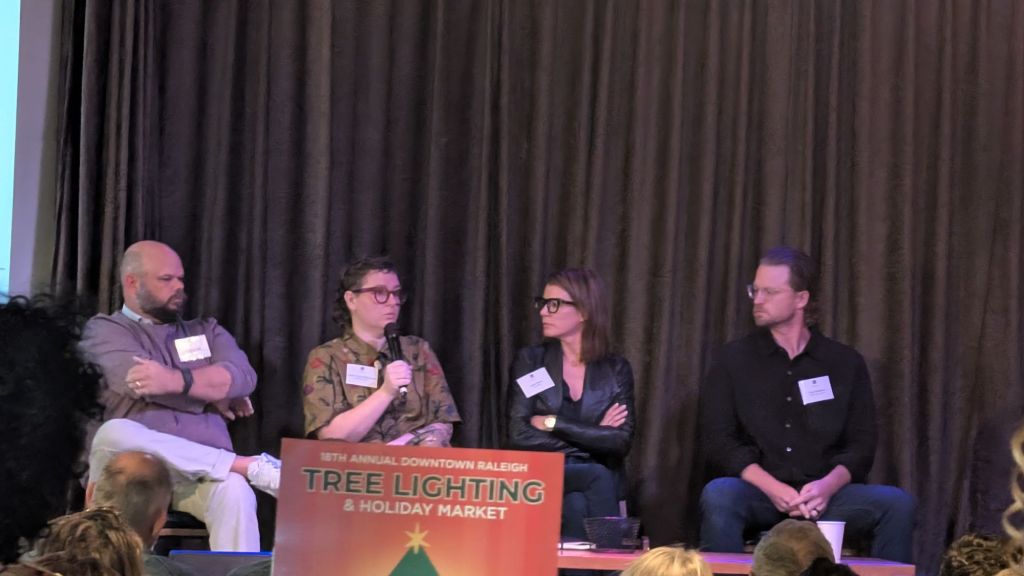
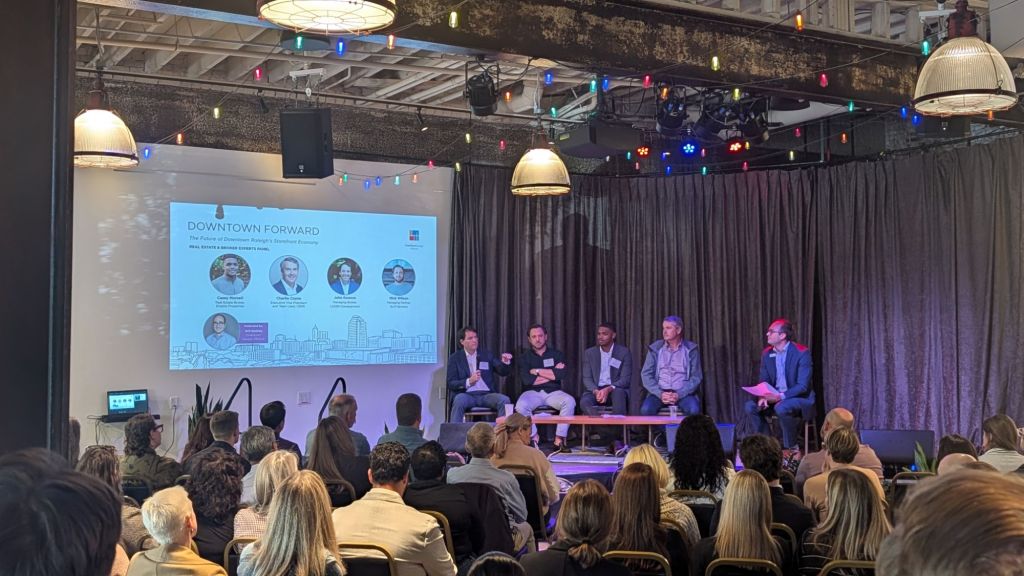
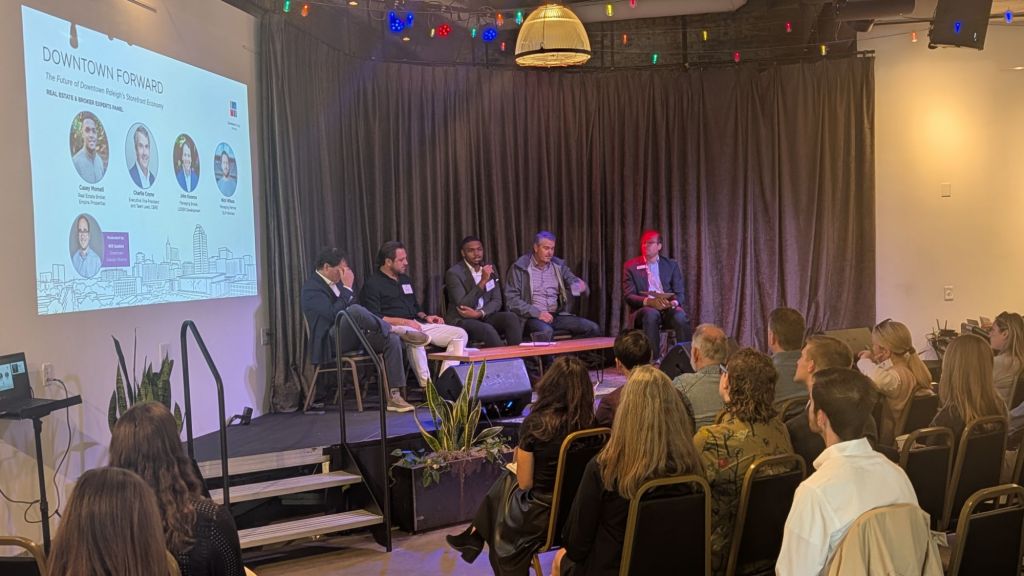
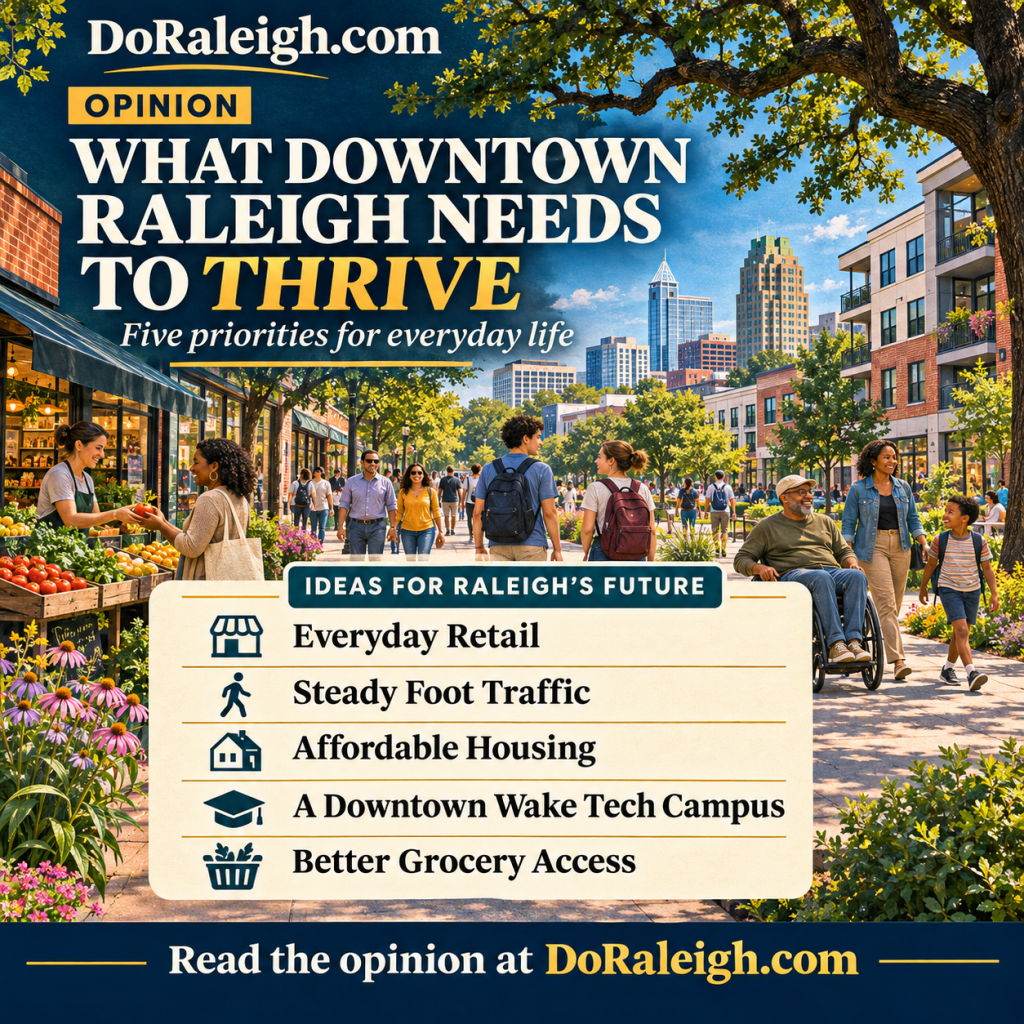
After attending the Downtown Forward event, I left thinking about five needs I did not hear the panelists adequately address: everyday shopping, consistent foot traffic, housing that is affordable, a downtown Wake Tech campus and another grocery store.
Downtown Raleigh has restaurants, nightlife, cultural destinations and businesses worth supporting. Its next stage of growth should make daily life easier for the people who live and work here.
A thriving downtown needs activity throughout the week, businesses with dependable customers and neighborhoods where people can meet their everyday needs.
Here are five priorities that deserve more attention.
1. More Everyday Retail and Shopping
Downtown’s boutiques, galleries and specialty shops contribute to its identity. They deserve continued support, along with a broader mix of practical shopping options.
Residents need convenient places to buy basic clothing, household supplies, toiletries, school essentials and other everyday goods.
When people leave downtown to complete routine shopping, downtown loses spending and potential foot traffic.
I would like to see a deliberate effort to recruit general-purpose retailers and affordable clothing stores. A small-format Target, a department-store concept like Belk or another neighborhood-scale retailer illustrates the shopping options I mean. These are examples of possibilities, rather than announced projects.
Independent businesses can fill these gaps, too. Local entrepreneurs selling useful, reasonably priced products should have opportunities to open and remain downtown.
Downtown Raleigh Alliance’s economic development strategy already identifies retail and the Fayetteville Street corridor as priorities. The next question is how those priorities translate into stores residents can use regularly.
2. Balanced Foot Traffic and Greater Business Stability
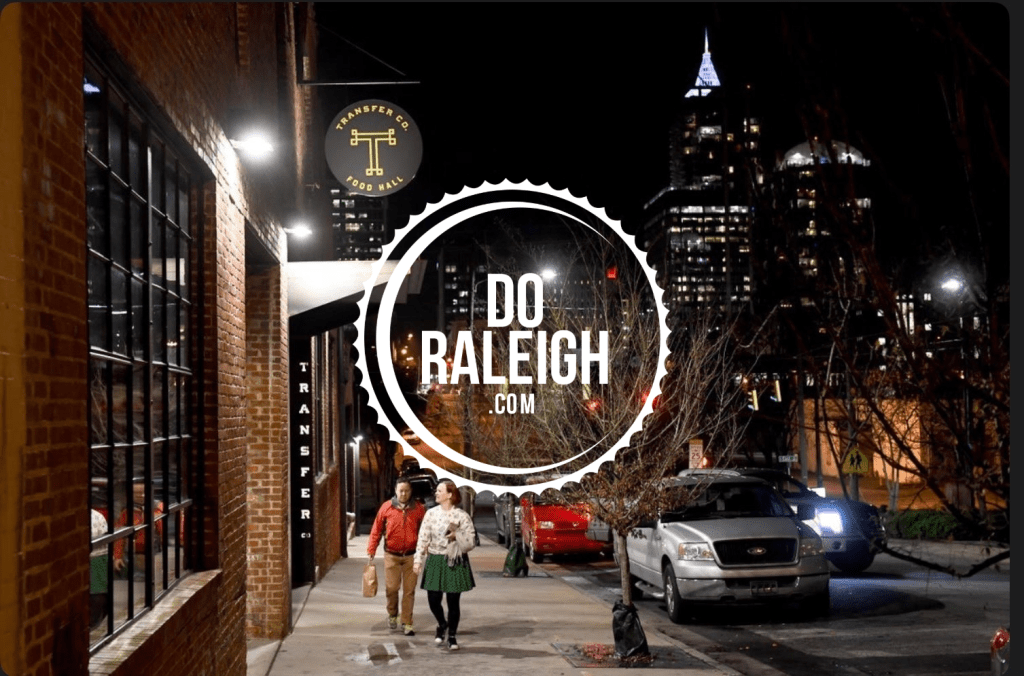
My concern about Fayetteville Street is the uneven experience of activity. One district can feel busy while another block feels quiet.
Downtown-wide progress matters, but we also need to understand which businesses and streets benefit—and at what times of day.
Glenwood South’s entertainment activity serves a purpose. Fayetteville Street and the surrounding core need a dependable mix of residents, office workers, shoppers, students, families and visitors.
Office attendance alone should not carry the responsibility for sustaining storefronts.
A stronger approach would include:
- Recruiting shops and services that generate repeat daytime visits.
- Supporting existing businesses as they manage operating costs.
- Filling vacant storefronts with useful, complementary businesses.
- Connecting housing, shopping, transit and public spaces.
- Measuring pedestrian activity by block and time of day.
Events can introduce people to downtown. Business stability requires customers to keep returning afterward.
We should measure success partly by whether businesses can maintain regular hours, retain employees and build a dependable customer base.
3. Housing That Downtown’s Workers Can Afford
Where do we expect downtown’s employees to live?
Restaurant workers, hotel employees, retail associates, cleaners and other workers help keep downtown running. Housing decisions should account for their needs.
Downtown needs a broader range of rental apartments, family-sized homes, accessible units and opportunities for ownership at prices people with different incomes can afford.
The Cottages of Idlewild offers one approach to preserving affordability. In its groundbreaking announcement, the City described 18 planned homes for households earning below 80% of area median income, combining rentals with homes sold through a community land trust. That announcement describes the development plan, rather than confirming current availability.
Projects such as Salisbury Square and development associated with Raleigh Union Station should also be evaluated on their actual housing commitments, eligibility requirements, rents and delivery timelines.
A total unit count does not tell us whether a downtown employee can afford to live there.
The questions should be clear: Affordable to whom, for how long and at what monthly cost?
Growth should also protect existing residents from displacement and create opportunities for people who have helped sustain these neighborhoods.
4. A Downtown Wake Tech Campus
Downtown Raleigh should explore a Wake Technical Community College campus or substantial teaching center connected to transit, employers and nearby neighborhoods.
Durham provides a useful comparison. Durham Tech operates Culinary Arts instructional space at American Tobacco in downtown Durham. Its main campus is on East Lawson Street; the downtown location shows how a focused educational program can fit into an urban district.
Explore Durham Tech’s campus locations.
Raleigh should consider what a similar downtown presence could accomplish here.
A Wake Tech location could bring students, instructors and staff downtown regularly while connecting residents with education and career opportunities.
Programs worth exploring could include hospitality, culinary training, business, digital skills and entrepreneurship. These are suggestions for study, rather than announced offerings.
The potential benefits extend beyond foot traffic. A downtown education center could help residents gain skills, advance at work, build businesses and connect with employers.
A feasibility study should examine student demand, existing Wake Tech programs, employer partnerships, suitable buildings, operating costs and transportation.
Accessible facilities, affordable meals and schedules that work for employed adults should be part of the planning.
Education deserves a permanent place in downtown’s growth strategy.
5. Better Grocery Access, Especially East of the Core
Publix at 417 W. Peace Street and Weaver Street Market at 404 W. Hargett Street provide grocery options on downtown’s northern and western sides.
Their presence does not resolve the question of convenient grocery access for residents east of the downtown core.
The issue is the complete trip: how long it takes, what it costs and whether someone can comfortably carry groceries home.
A trip that feels manageable by car may be difficult for someone walking with children, using a wheelchair, carrying heavy bags or relying on transit.
Distances vary by neighborhood and destination. We need to understand whether residents can reliably reach affordable groceries through practical walking routes, accessible sidewalks and useful bus connections.
Potential solutions include recruiting an east-side grocery store, supporting a neighborhood market with fresh food and household essentials, and improving transportation to existing stores.
Grocery access should be treated as part of downtown’s economic foundation.
Make These Priorities Measurable
These five needs reinforce one another.
Housing brings residents. Education creates opportunities and regular activity. Useful stores encourage local spending. Grocery access makes daily life more practical. Consistent foot traffic helps businesses build stability.
City leaders, property owners, developers, Wake Tech and downtown organizations should work with residents and employees to establish clear goals and report progress.
Downtown Raleigh’s future should be measured partly by this question:
Can the people who keep downtown running also afford to live, learn, shop and meet their daily needs here?
What store, service, educational opportunity or housing option would make downtown Raleigh work better for you? Share your perspective with DoRaleigh.com.
Connect With Us: Instagram | Facebook | BSky | Linkedin
Share With Us: Post your community News, Events, on our Submissions Page.
Advertise With Us: Interested in Advertising click here.
Editor: Bryan Tomlinson
Design, Optimization, and Marketing Services Provided by BTDesigns.pro


Leave a Reply